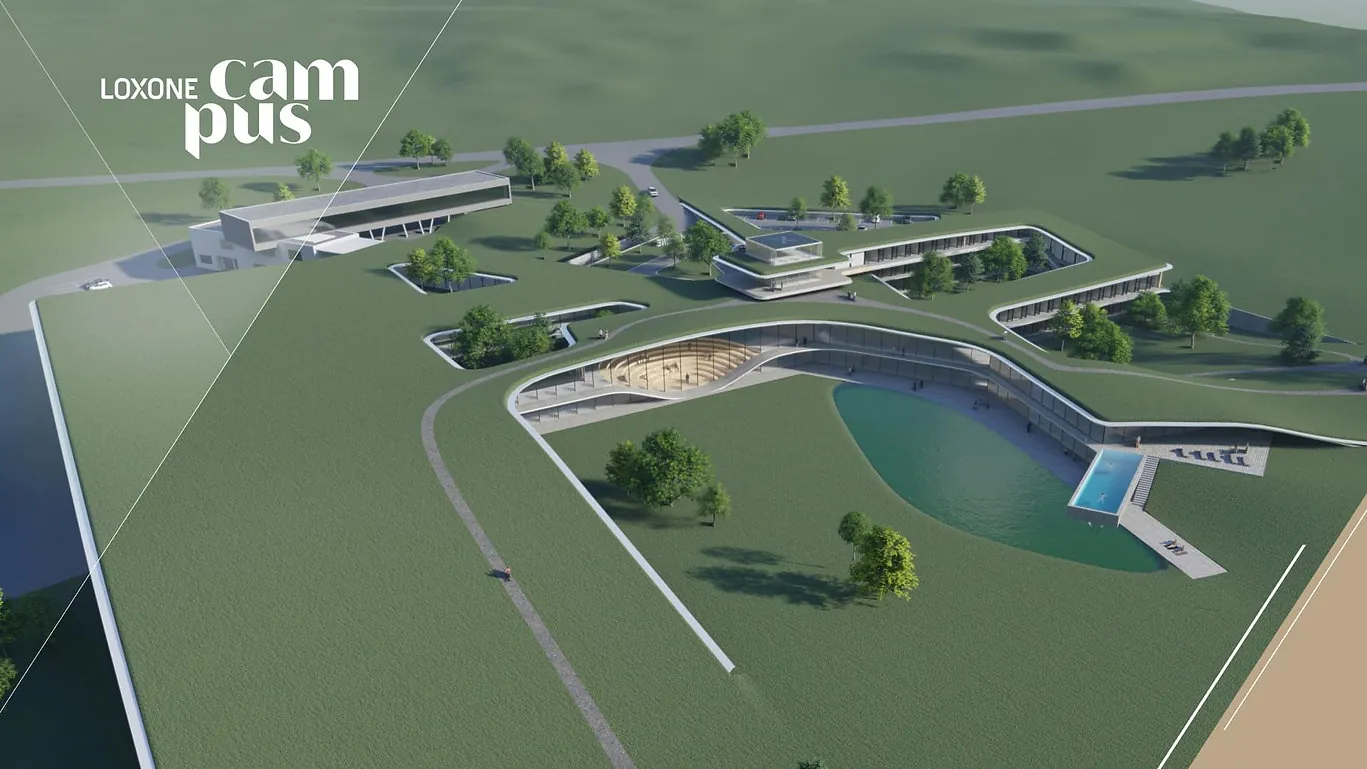
References
Case Studies
Reference projects by building type and country, with the systems in scope and the operating questions each one answers.
How these cases were selected
The list is deliberately small. A case is included when it shows a building type, an integration problem or an operating model that a client is likely to recognise. We look for a clear brief, a defined scope, more than one subsystem and a result that can be described without sales language. Country and climate matter because they change the HVAC and shading logic. A project in a hot climate will weight shading and cooling differently from one in a temperate climate, and a resort will weight guest-room control differently from an office. The list is not a ranking, and it is not a claim that every project is identical to yours. It is a set of references to reason from. Each case is here because it answers a question a client actually asks, not because it photographs well. Where the reference material is thin, the page says so. The selection is reviewed when a new reference is added, so that the list does not drift into a gallery.
- Recognisable building type and operating model
- More than one subsystem in scope
- A clear integration or control problem
- A result that can be described factually
How to read a case
Each case page follows the same structure: facts, brief, challenge, response and what the project demonstrates. The facts state location, building type and scope. The brief explains what the owner or operator needed. The response describes the architecture and the systems that were integrated. The final section separates what the project shows from what it does not. Read the scope before the images: a beautiful building with one lighting scene is not evidence of an integrated operating model. The structure is repetitive so that cases can be compared. If two cases look similar, compare their scopes and their failure modes, not their photographs. Look for the systems that are not mentioned: access, fire, parking and tenant billing are often outside the reference. Look for the operating model: who runs the building, how many sites, what the maintenance team can support. A case with no stated scope is a brochure, not a reference.
- Facts: location, type and scope
- Brief: the operating problem
- Response: architecture and systems
- Demonstrates: what the case does and does not prove
Reference projects and first-party delivery
These pages describe reference applications from the global network. Photography and project information come from the reference library; the projects were delivered by the delivery companies named in the original material. They are not presented as projects delivered by our team, and they should not be read as a client list. If you need a first-party reference for a specific building type, ask for it directly and we will say what exists and what does not. That distinction protects both sides. It also keeps the engineering conversation honest: a reference demonstrates an architecture, not a commercial relationship. Scope and delivery responsibility vary by site, and a reference does not transfer a warranty or a service obligation. Where the original material names a delivery partner, the page keeps that attribution. Where it does not, the page does not invent one. That attribution is part of the reference, not a disclaimer added at the end.
- Global reference applications, not our client list
- Scope and delivery responsibility vary by site
- First-party references available on request
- No invented metrics or client names
What the set covers
The set spans workplaces and campuses, hotels and resorts, restaurants, residential buildings and retrofit. It includes new-build and renovation, single buildings and multi-building sites, local control and central supervision. It does not cover every climate, every protocol or every commercial model. Use it to find the closest operating pattern, then ask which parts would change in your building: the HVAC system, the access model, the PMS, the tenant structure or the maintenance organisation. Those differences are usually more important than the photographs. A case is a starting point for a specification conversation, not a substitute for one. The set is stronger on room control, lighting, shading and energy than on heavy plant, because that is where the reference material is strongest. It is also stronger on Europe than on other regions, which affects the protocol mix. Read the country and the building type together, not separately. A case from a different climate can still be useful if the control problem is the same.
- Workplace, campus and mixed-use
- Hotel, resort and restaurant
- Residential and retrofit
- New-build and renovation
Choosing a comparable case
A useful reference resembles your problem, not your taste. Start with the building type and the operating model: a hotel with PMS-driven rooms, a campus with multiple buildings, a restaurant with service scenes, a retrofit with existing devices. Then compare the systems in scope and the protocols at the edge. Finally, look at what the case does not cover. If your project includes tenant billing, fire integration or a legacy BMS, say so early; the closest reference may still need a different boundary. Ask what was difficult, not only what was delivered. The difficult part is usually the part that resembles your project. Ask who operates the building and what they can maintain. Ask which systems were integrated at the edge and which were left standalone. Ask what the project would do differently now. Bring your own point schedule or system list to the comparison; it makes the gaps visible.
- Start with building type and operating model
- Compare systems and protocols in scope
- Check what the case excludes
- Ask what was difficult and what would change
Using a case in a tender
Use a case to frame the questions you ask bidders, not to prove that a bidder can deliver. A reference can show an operating model, a point schedule pattern, a protocol boundary or a room template. It cannot show that a bidder has the team, the spares or the local support for your site. Put the reference in the tender as a question: how would you handle this boundary, this failure mode, this handover? Ask for a point schedule sample, an alarm philosophy and a test plan. A bidder who can discuss those documents is more useful than one who can show a similar photograph. Use the case to test the specification, not to replace it. If the reference depends on a system you do not have, say so and ask for the alternative. The useful outcome is a sharper specification and a shorter bid evaluation. A reference that cannot survive those questions is not a strong reference.
- Use the case as a question, not a proof
- Ask for point schedule, alarm philosophy and test plan
- Test the specification, not replace it
- Ask for the alternative where systems differ
Reference projects by building type and country
15 rows| Case | Building type | Country | Focus |
|---|---|---|---|
| Loxone Campus | Campus and workplace | Austria | Mixed-use campus on one platform |
| Dukley Gardens | Residential and resort | Montenegro | Apartment comfort and shared areas |
| Troyka | Restaurant | Germany | Scene control through the service |
| x-tention Campus | Office campus | Austria | Multi-building campus and façade energy |
| Hotel Club Sunway | Hotel | Spain | Room-by-room renovation |
| City Walk Apartment | Apartment | United Arab Emirates | Per-room panel control |
| McDonald's Zvolen | Restaurant chain | Slovakia | New-build restaurant integration |
| Skalka Restaurant | Restaurant | Czechia | Two operating modes, central plant |
| Brno Leitnerova | Residential | Czechia | Apartments and common areas |
| C-Linder Peer | Retrofit and community | Belgium | Relighting retrofit |
| Office and Administration Building | Office | Germany | Predictive shading in an open plan |
| Zurich Airport offices | Workplace | Switzerland | Local gateways and room automation |
| AXON Germany | Office | Germany | Lighting, shading and climate |
| German National Lottery | Commercial and workplace | Germany | Façade, lighting and climate |
| Schüco China Experience Center | Commercial and showroom | China | Façade, shading, climate and lighting |
Case study library
8 cases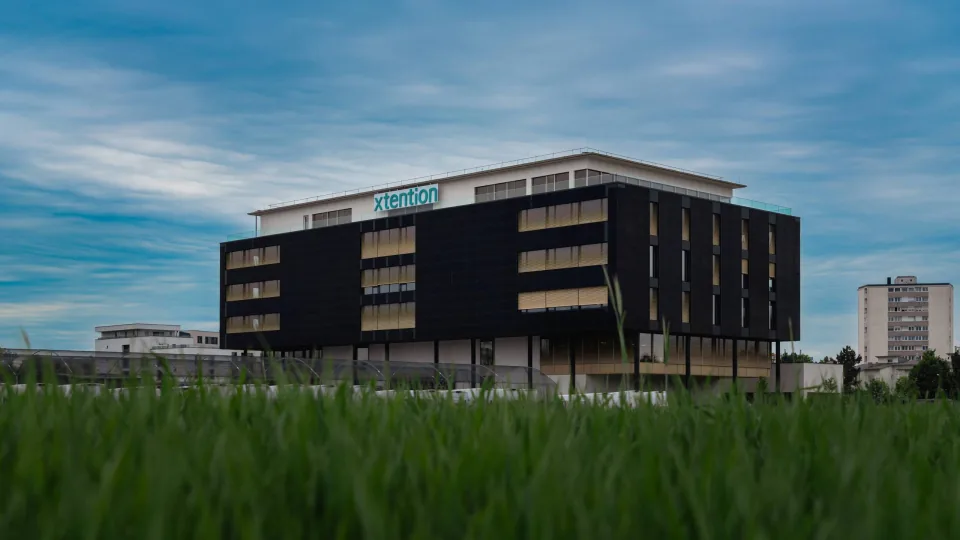
Office campus · Wels, Austria
x-tention Campus
The new x-tention campus in Wels brings 11,034 m² of net usable area, 1,639 Loxone components and 31 Miniservers onto one building automation system. Around 15 km of Tree cabling connects rooms, while a 512 kWp facade photovoltaic array is designed to cover the building's entire annual energy demand of roughly 500,000 kWh.
Read case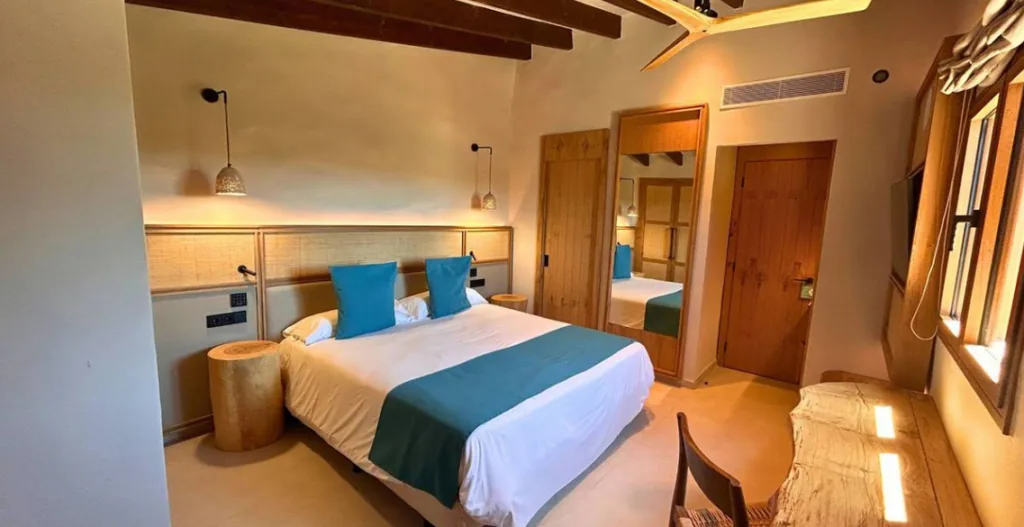
Hotel · Es Pujols, Formentera, Spain
Hotel Club Sunway Punta Prima
The Hotel Club Sunway Punta Prima in Es Pujols, Formentera, rebuilt its rooms around one Miniserver per room. The system links door access, bathroom, bedroom and terrace, switches the room controls into the guest's language at check-in and connects to the hotel's reservation system, while presence, window and energy monitoring support central management.
Read case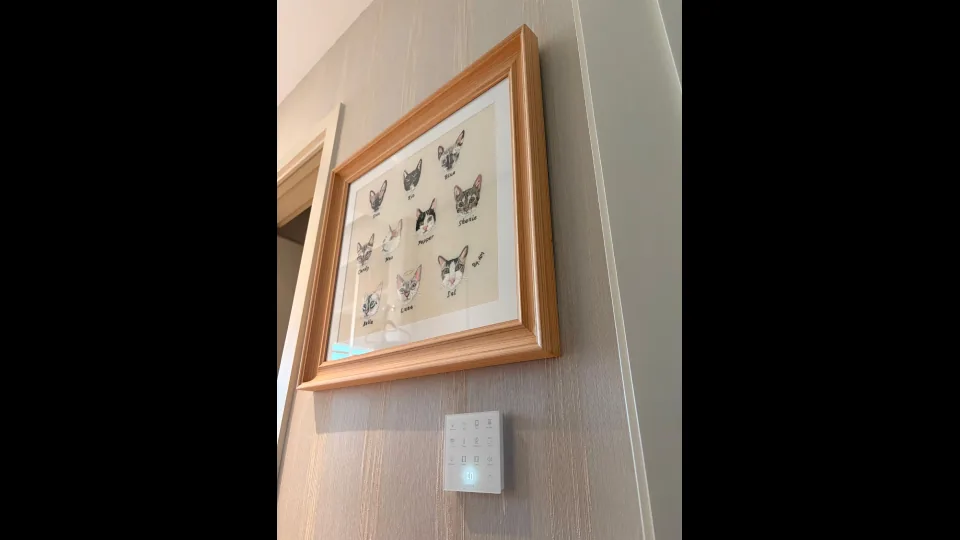
Apartment · Dubai, UAE
City Walk Apartment
A small City Walk apartment overlooking the Downtown skyline runs lighting, climate, curtains, sheers and audio from one glass panel in each room. One-touch scenes for mornings, dining and entertaining set the whole home at once, and the curtains open automatically each morning. The technology stays in the background and follows the owner's daily routine.
Read case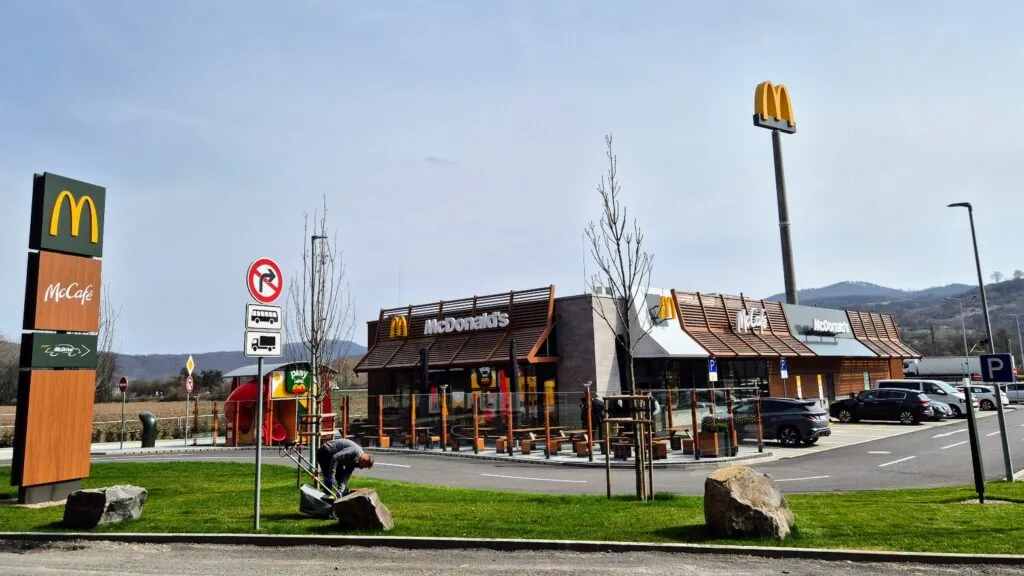
Restaurant chain · Zvolen, Slovakia
McDonald's Zvolen
A new McDonald's restaurant on a greenfield site in Zvolen runs on a fully integrated Loxone system, delivered from design through control and cabling. The installation manages HVAC, background lighting, irrigation, the entrance air curtain, audio, access, energy statistics and RGBW lighting scenes from one platform, giving the operator reliable, data-driven control of daily operations.
Read case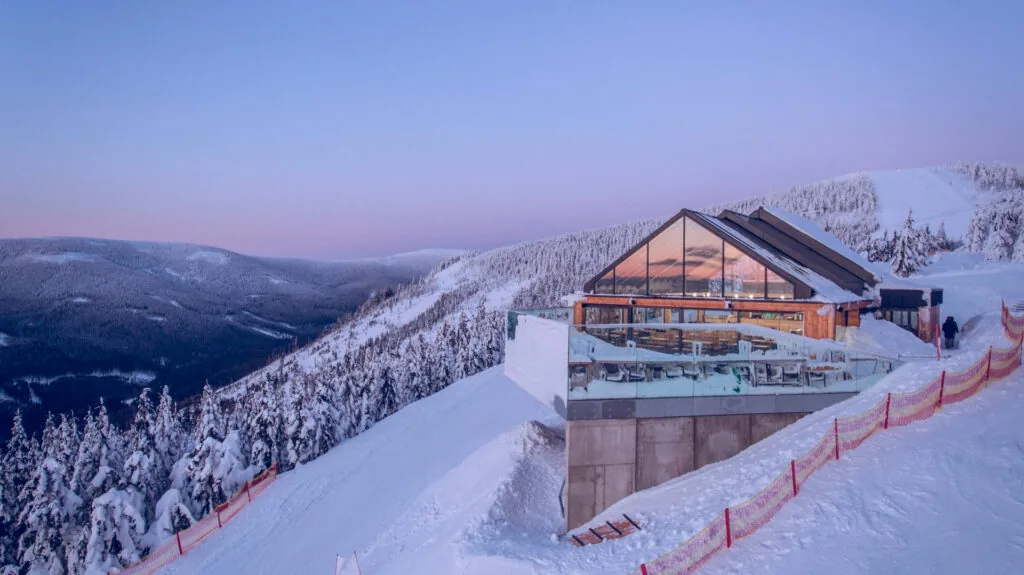
Restaurant · Dolní Morava, Czechia
Restaurant Skalka
The panoramic Restaurant Skalka in Dolní Morava runs heating, ventilation, cooling, refrigeration and the motorised glass roof on one Loxone system. Two operating modes keep guests comfortable while the restaurant is open and cut consumption when it is empty. Online energy monitoring and equipment condition checks help the operator spot waste and prevent failures before they affect service.
Read case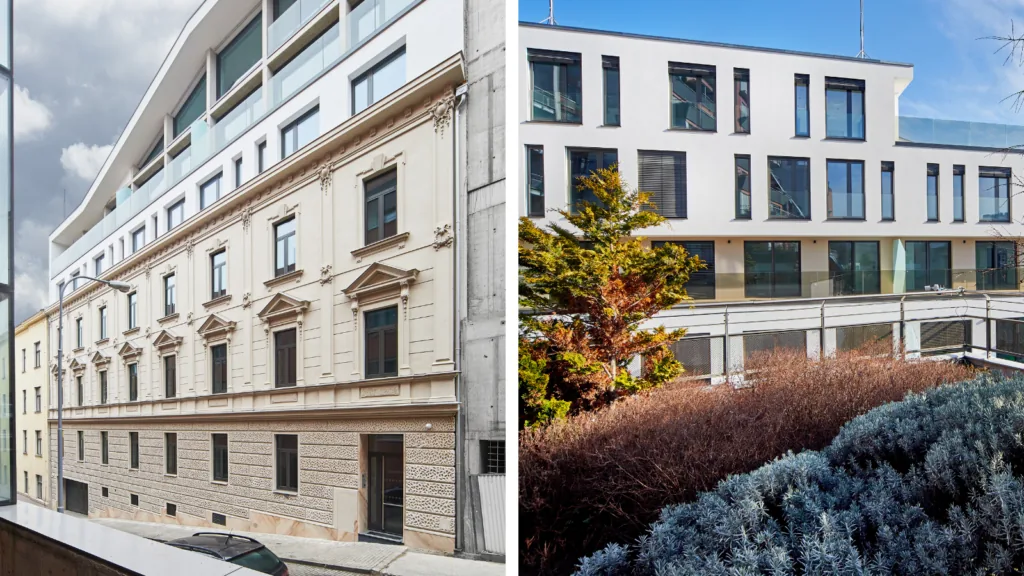
Residential · Brno, Czechia
Apartment building Brno Leitnerova
Leitnerova is a new apartment building in Brno with 28 apartments and shared common areas, fully equipped with Loxone. Lighting, shading, security and air conditioning run in each home, while water, electricity and heat are metered. The project won first place in the Construction of the South Moravian Region competition and combines long-term subletting with apartments tailored to individual residents.
Read case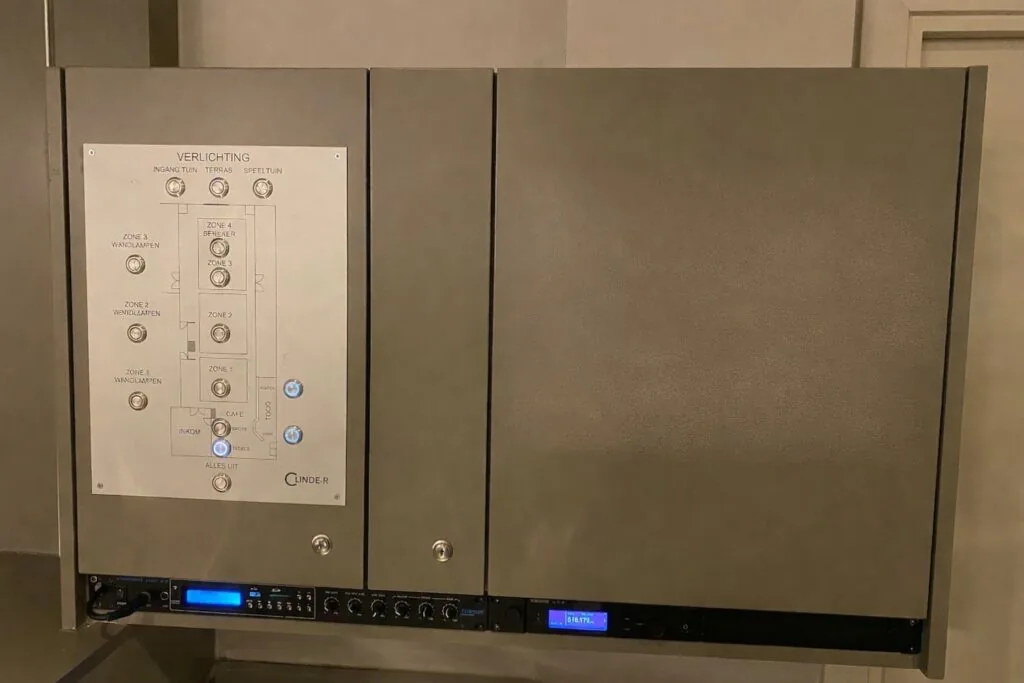
Parish centre retrofit · Peer, Belgium
C-Linder Peer
C-Linder in Peer is a parish centre whose functional and ambient lighting was renewed with a Loxone-based control system. A custom synoptic panel with DMX dimmable lighting gives staff clear control and dimming feedback, motion detectors add automatic operation, and everything switches off when the room is left. Audio was upgraded with a media player and wireless microphone.
Read case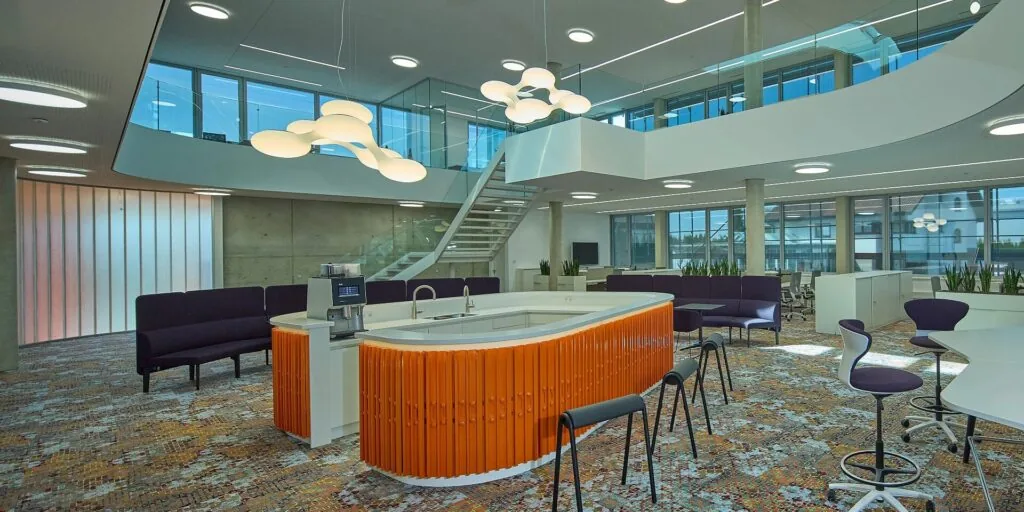
Office · Neuler, Germany
Office and administration building
This open-plan office and administration building in Neuler has an envelope of around 1,200 m², more than 100 employees and 360-degree glass facades. Loxone controls heating, cooling and the shading screens, using forecasting to act before solar gain overheats the interior. Without that predictive control, the building would become unbearably hot by midday.
Read caseProject images
3 images

Frequently asked
01Are these projects delivered by your team?
No. They are reference applications published by Loxone, delivered by the delivery companies named in the original material. We use them to explain architecture and operating models, not as a client list. First-party references are provided separately when they exist.
02Why only a small number of cases?
Because a long gallery is less useful than a set of recognisable operating problems. Each case is chosen to show a building type, an integration scope or an operating model that a client can compare with their own project.
03Can I visit one of these buildings?
Visits depend on the owner, the operator and the site. We can discuss whether a reference visit is appropriate, but we do not promise access to a third-party building.
04Do you have a hotel case?
The set includes hotel and resort references, including a room-by-room renovation and a larger residential resort. The closest case depends on your room type, PMS and operating model.
05Do you have a case with KNX or BACnet?
The case pages describe the systems in scope where that information is available. Protocol details vary by site; we can discuss the integration pattern rather than claim a protocol mix that the reference does not document.
06Can you provide metrics for these projects?
Only where the reference material provides them and the owner permits publication. We do not invent savings, point counts or payback figures. If a number is not documented, the case is described qualitatively.
07How do we use a case in our procurement?
Use it to frame the operating model and the questions you ask bidders: which systems are integrated, where control sits, how the room or plant behaves when the network fails, and what the handover contains.
08What if our building type is not listed?
Tell us the type, systems and constraints. The closest reference may be a different building type with the same integration problem. We will explain the difference rather than force a match.
Next step
Bring us the building.
Tell us the building type, systems in scope and the outcome you need. We will map the shortest path to a working system.