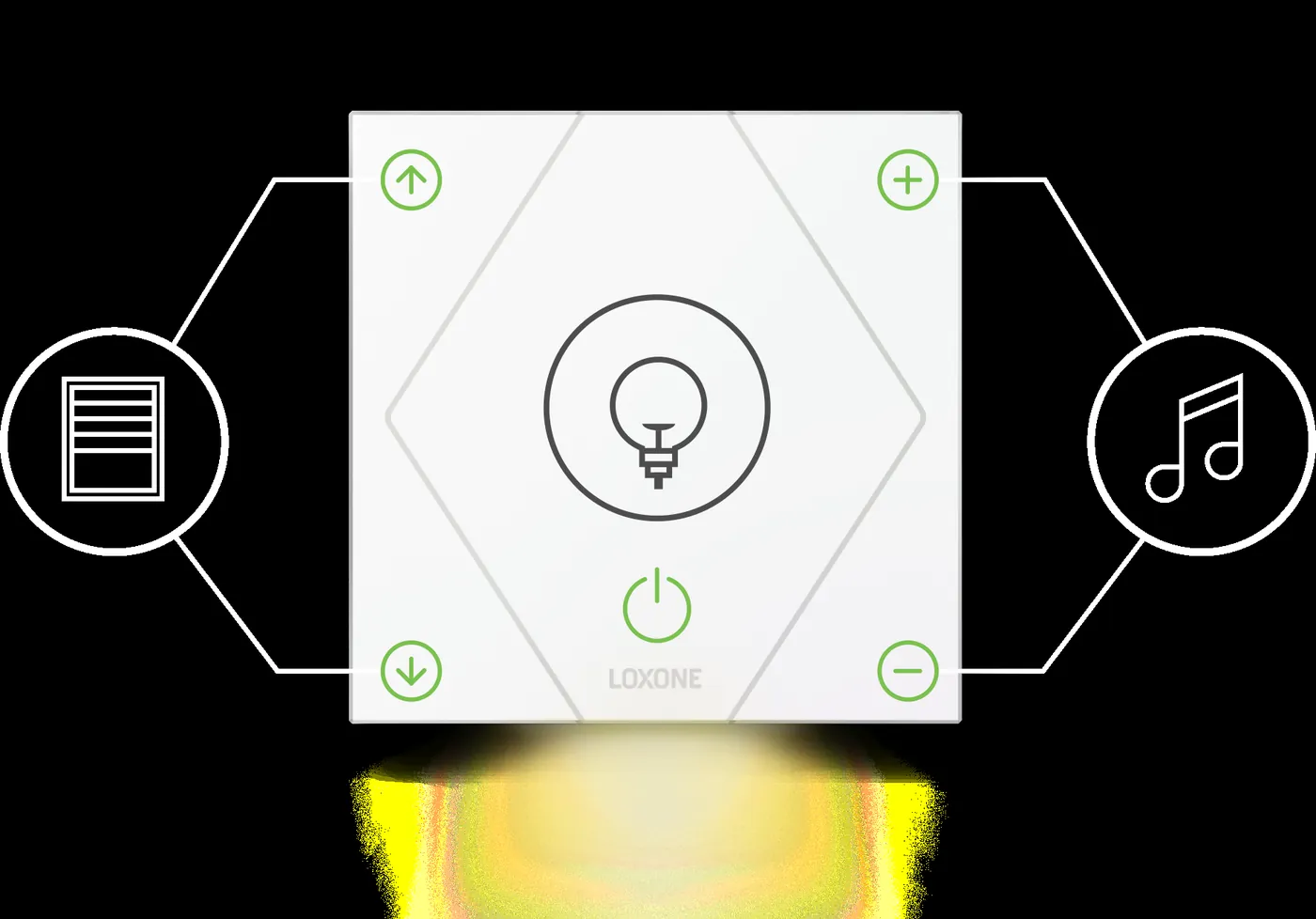
System integration
Building Automation System Integration — KNX, BACnet, Modbus & Loxone
System integration for building automation: KNX, BACnet, Modbus, DALI and Loxone Tree, Air and 1-Wire, plus gateway selection, point mapping and testing.
What integration means here
Building system integration is not IT systems integration. It concerns chillers, air-handling units, meters, luminaires, doors, cameras and the controllers that run them. Integration makes those systems share data and respond to common rules without replacing equipment that still works. It has three parts: a physical connection, a protocol translation and a data model that gives every point a consistent name and meaning. A gateway alone is not integration. The engineering work is the mapping, the logic and the testing that make the data usable. The interface list is therefore a commercial document as much as a technical one, because it assigns responsibility for every point. Without that list, the project discovers its gaps during commissioning, when changes are most expensive. The list should also record who supplies each gateway, who configures it and who tests the link.
- Physical connection and addressing
- Protocol translation by gateway
- A common point model
- Tested rules and documentation
KNX
KNX is a building-control standard for lighting, shading, room control and some HVAC terminals. Devices share a twisted-pair bus, with addresses organised into lines and areas. Configuration is held in the devices through an engineering tool, and a gateway can expose group addresses to an IP network or another platform. KNX is strong where room functions need a stable, vendor-independent bus. Integration work focuses on group address naming, data point types and the behaviour when a gateway or bus segment goes offline. A KNX installation that is well documented is easier to extend; one without group address naming becomes a black box. The gateway should be tested with the real bus load, not only with a bench device. Bus power, termination and the number of devices per line also matter, because a marginal KNX line produces faults that look like device failures.
- Twisted-pair device bus
- Group addresses by line and area
- Gateway to IP or another platform
- Test offline behaviour
BACnet
BACnet is the common language of plant and building management systems. It defines objects, properties and services, so a chiller or AHU can expose its status, setpoints and alarms in a structured way. BACnet/IP runs over Ethernet; MS/TP runs over a serial bus. Integration requires the device instance, object identifiers, units and read/write permissions. Change-of-value subscriptions reduce polling, but not every device implements them well. The point map should record which objects are read-only, which are commandable and what happens when communication is lost. The object list should be exported and reviewed before graphics are built, not discovered during commissioning. Read-only status points and commandable setpoints should be separated in the graphics and the permissions. BACnet device instance numbers must be unique across the internetwork, and BBMD or router configuration must be documented when traffic crosses subnets.
- Objects, properties and services
- BACnet/IP over Ethernet
- MS/TP over serial bus
- Read/write rights and fallback
Modbus
Modbus is simple, widespread and unforgiving. It exposes registers and coils, and the integrator must know the register map, the data type, the scaling and the byte order. Modbus RTU runs over RS485; Modbus TCP runs over Ethernet. Meters, inverters, power supplies, sensors and many PLCs use it. Because Modbus has no standard object model, two devices from different vendors can use the same register number for different meanings. The register map and the engineering units belong in the integration document, not in someone's memory. A single wrong scaling factor can make an energy report plausible but false, which is worse than an obvious failure. Polling too aggressively can saturate a serial bus and cause timeouts that look like device faults. Serial segments also need correct termination, bias and isolation, and a device count that the bus can actually support.
- Registers, coils and function codes
- RTU over RS485, TCP over Ethernet
- Scaling and byte order
- Documented register map
DALI and the Loxone buses
DALI controls addressable luminaires, with individual addressing, groups, scenes and fault feedback. It is a lighting bus, not a general building bus, and it needs a gateway or controller to join the wider system. Loxone uses Tree for wired devices, Air for wireless devices and 1-Wire for simple sensors. Tree and Air carry both power and data for compatible devices; 1-Wire is a low-speed sensor bus. The choice between them follows the construction method, the device type and the need to keep the bus topology simple. DALI and Loxone buses should be kept within their intended segment sizes and power limits, with the design showing where each segment starts and ends. The choice should be recorded in the design, including the reason, so a later change does not casually mix bus types. A DALI emergency-lighting test schedule also needs to be documented, because it is a life-safety routine, not a scene.
- DALI addressing, groups and scenes
- Tree for wired Loxone devices
- Air for wireless devices
- 1-Wire for simple sensors
Gateways, point mapping and testing
Gateway selection is a design decision. The gateway must support the required protocol version, the number of points, the polling rate and the direction of data. Point mapping then assigns every data item a name, address, type, unit and permission. Naming should match the drawings and the operator graphics. Testing starts in the factory with a point-to-point check, continues on site with live devices, and ends with interlock and failure tests. The handover pack should include the address list, gateway configuration, test records and a clear statement of what is read-only. The integration document should be a living record: when a device is replaced, its address and point mapping are updated in the same place. Test records should name the device, firmware, point and expected value, not only pass or fail. A gateway that is not documented is a future outage with an unknown cause.
- Protocol version and point count
- Name, address, type and unit
- Factory and site testing
- Address list and test records
Network design, addressing and time synchronisation
Integration succeeds or fails at the network layer. Start with an addressing plan: IP ranges per system, VLANs for building services, and a rule for which devices are routed and which are isolated. BACnet/IP needs attention to broadcast domains, device instance numbers and BBMD configuration when traffic crosses subnets. Modbus TCP needs stable addressing and a polling plan; serial Modbus needs correct termination, bias and isolation, plus a limit on devices per segment. Gateways should sit close to the equipment they serve and be powered from a circuit that is not switched off for maintenance. Time synchronisation should come from one source, with all controllers and gateways using the same NTP service; otherwise trend timestamps and alarm sequences cannot be correlated. Network documentation should be part of the handover, not a diagram drawn after the first fault.
- IP and VLAN addressing plan
- Broadcast domains and BBMD
- Serial termination and isolation
- One NTP source for all devices
Testing, documentation and common failure modes
Testing should follow the integration matrix rather than the integrator's confidence. Factory testing checks gateway configuration, point names and read/write rights against a bench device. Site testing repeats the checks against live equipment and adds communication-failure tests: disconnect a gateway, remove a bus segment, corrupt a register, restart a controller. Alarms and interlocks are then tested end to end, including the operator acknowledgement and audit trail. Documentation should include the address list, point map, gateway settings, network diagram, test records and a statement of read-only points. Common failures are predictable: a duplicate BACnet device instance, wrong Modbus byte order, a gateway that polls faster than the device can answer, an unsupported BACnet service, a KNX group address with the wrong data point type, and a firmware mismatch between gateway and device. Each has a test that would have found it.
- Bench and site point checks
- Communication-failure tests
- End-to-end alarm and interlock tests
- Address list, point map and firmware record
Access control integration
Access control integration connects door events, reader decisions and alarm states to the building platform without becoming the access-control supplier. The access controller remains the authority for credential validation and door release; the platform subscribes to events, applies cross-system logic and presents a single timeline. Typical links are door-held, forced-open, valid-entry and duress events, plus video and lighting responses. The scope should state which system owns the door, which owns the event log, and what happens when either side is offline.
Protocol and bus integration matrix
18 rows| Interface | Typical devices | Physical layer | Integration method | What to verify |
|---|---|---|---|---|
| BACnet/IP | Chillers, AHUs, BMS | Ethernet | Native interface or gateway | Device instance, objects, write rights |
| BACnet MS/TP | Legacy plant controllers | RS485 | Gateway or router | Baud rate, addressing, polling load |
| Modbus TCP | Meters, inverters, PLCs | Ethernet | Native interface or gateway | Register map, scaling, byte order |
| Modbus RTU | Meters, sensors, VSDs | RS485 | Gateway or serial port | Slave address, parity, timeout |
| M-Bus | Water, heat and gas meters | Twisted pair | M-Bus master or gateway | Addressing, baud rate, telegram format |
| KNX TP | Lighting, shading, room control | Twisted pair | KNX gateway | Group addresses, data point types |
| KNX/IP | KNX routers and interfaces | Ethernet | Native IP interface | Routing, tunnelling, filter tables |
| DALI | Addressable luminaires, drivers | DALI bus | DALI gateway or controller | Addressing, groups, fault feedback |
| DMX | Architectural and scene lighting | DMX bus | DMX gateway | Universe, channel map, fade behaviour |
| Loxone Tree | Loxone devices and sensors | Tree cable | Native Tree interface | Topology, device count, termination |
| Loxone Air | Wireless sensors and controls | Radio | Native Air interface | Signal strength, battery, interference |
| 1-Wire | Temperature probes | 1-Wire bus | Native 1-Wire interface | Cable length, sensor count, addressing |
| RS485 or RS232 | Legacy controllers and devices | Serial | Gateway or serial interface | Protocol, pinout, isolation |
| Dry contacts | Fire, lifts, pumps, alarms | Wiring | Digital inputs and relays | Voltage, supervision, fail-safe state |
| Pulse inputs | Electricity, water and gas meters | Wiring | Digital input counting | Pulse value, debounce, totaliser reset |
| HTTP or REST API | Business systems, VMS, PMS | Ethernet | API integration | Authentication, rate limits, data model |
| ONVIF | IP cameras and NVRs | Ethernet | ONVIF client or VMS API | Profile, authentication, stream and events |
| OPC UA | SCADA, analytics and business platforms | Ethernet | OPC UA client or server | Endpoint, security policy, node model |
Project images
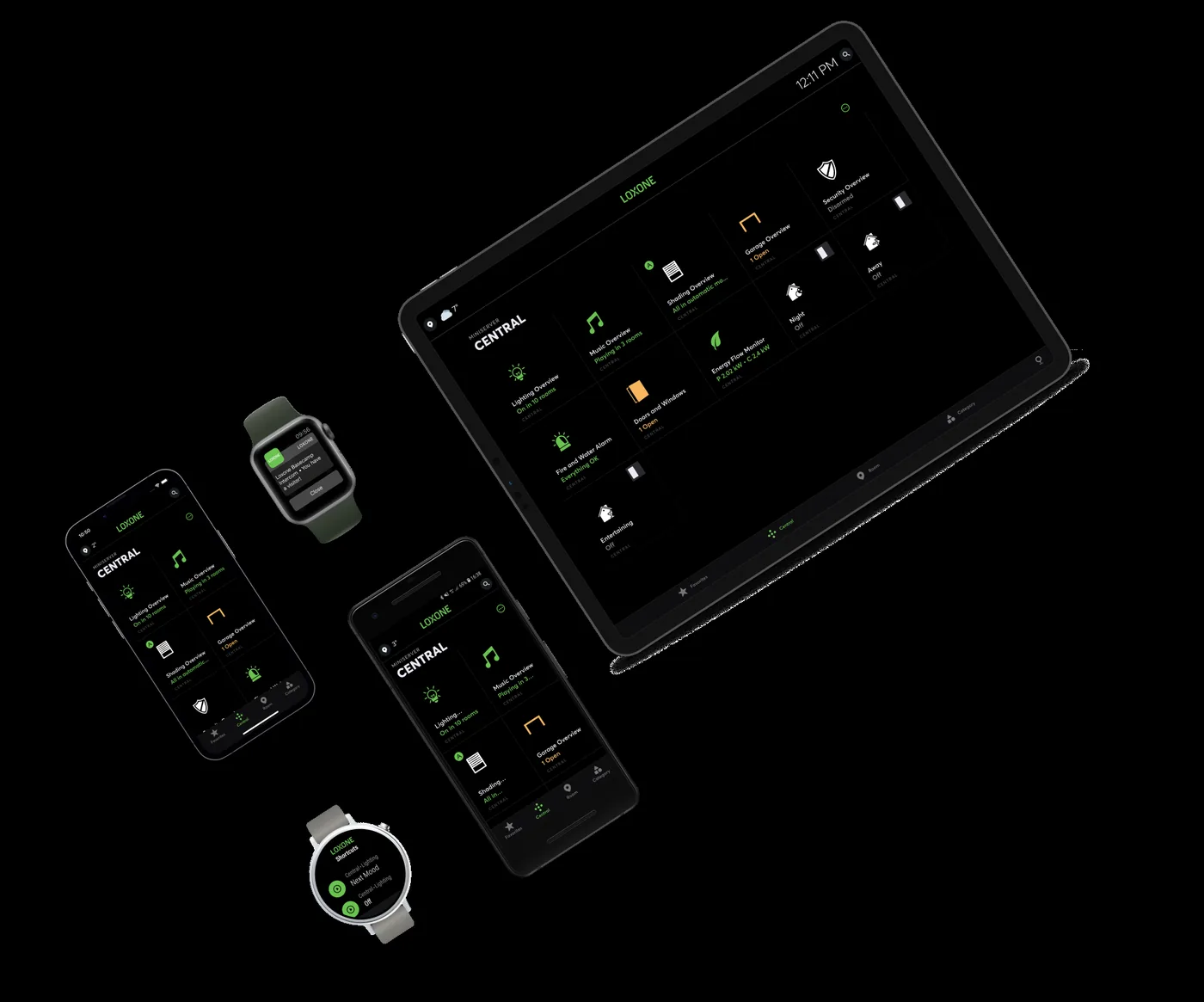
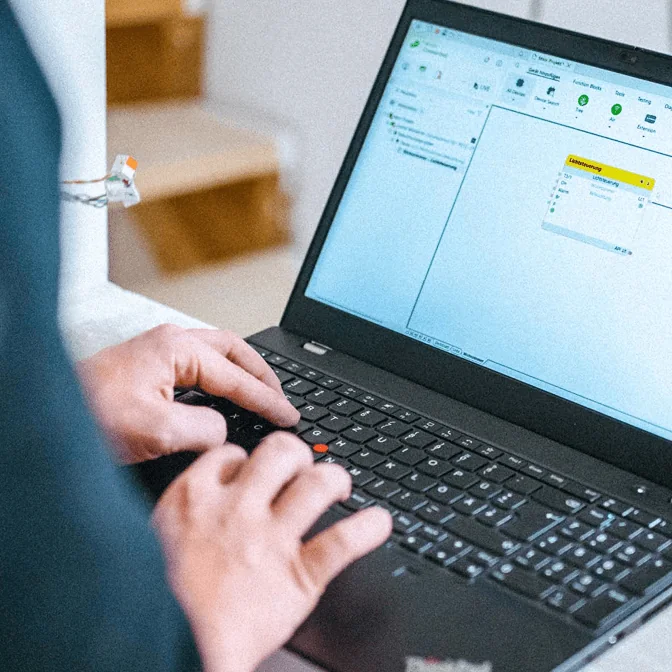
3 images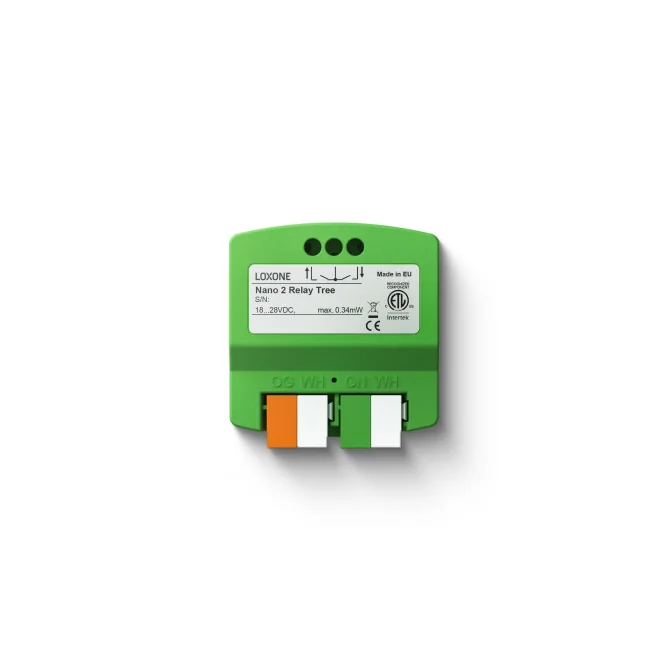
Frequently asked
01What is system integration in building automation?
It is the work of connecting separate building subsystems so they share data and act together. It covers physical connections, protocol gateways, a common point model and tested rules across systems.
02What is the difference between KNX and BACnet?
KNX is a bus standard for lighting, shading and room control. BACnet is an object-based protocol for plant and building management. They solve different problems and often meet through a gateway.
03Can Loxone integrate with BACnet?
Yes, through a BACnet gateway or interface. The integration exposes selected objects and properties. Read/write rights, point naming and fallback behaviour are confirmed before commissioning.
04How does Modbus integration work?
The gateway reads or writes registers and coils on the device. The register map defines the data type, scaling and byte order. Every point is then mapped into the platform with a name and unit.
05What is DALI used for?
DALI controls addressable luminaires, including dimming, groups, scenes and fault feedback. It is common in commercial lighting and needs a gateway or controller to join the wider building system.
06What are Loxone Tree, Air and 1-Wire?
Tree is a wired bus for Loxone devices. Air is the wireless connection for compatible devices. 1-Wire is a low-speed bus for sensors such as temperature probes. Each has a different role in the topology.
07Do I need a gateway for every protocol?
Not always. Some controllers expose the protocol natively; others need a gateway. The decision depends on the equipment, the point count and whether the gateway can handle the required polling and write behaviour.
08What is point mapping?
Point mapping assigns every data item a name, source address, data type, unit, permission and alarm limit. It is the bridge between the protocol register or object and the operator graphics.
09How is integration tested?
Testing starts with a point-to-point check in the factory, continues on site against live devices, and finishes with interlock, alarm and communication-failure tests. Results are recorded and handed over.
Next step
Bring us the building.
Tell us the building type, systems in scope and the outcome you need. We will map the shortest path to a working system.