
Pricing
Building Automation Price — Cost by Points, Area & System
How building automation is priced: scope tiers, point and area drivers, integration effort, commissioning and what to compare in a quote. No list prices.
Why there is no list price
Two buildings of the same size can need very different automation. One has a modern BMS with BACnet and spare capacity; the other has legacy controllers, missing drawings and meters with no communication. One needs room control and metering; the other needs plant sequencing, alarms and multi-site reporting. A price per square metre hides those differences. We price from the scope: the point schedule, the systems, the interfaces, the graphics, the commissioning and the support the building team needs. The result is comparable only when the scope is comparable. A like-for-like comparison therefore starts with a written scope, not with a price list. Two quotes that look similar may include different amounts of engineering, testing and training. We do not publish currency amounts, because a number without the scope behind it is not a price; it is a guess.
- Scope before square metres
- Existing systems change the effort
- Interfaces and gateways vary
- Commissioning is part of the price
The three scope tiers
We describe projects in three scope tiers. Essential covers core plant and room control: controllers, field devices, schedules, alarms and a basic operator interface. Integrated adds multi-subsystem supervision, metering, access and CCTV linkage, trends and reporting. Enterprise adds multi-building consolidation, IBMS-level dashboards, advanced alarm routing, redundancy and long-term support. The tiers are not fixed packages. They are a way to compare scope before a detailed design. A project can sit between tiers, and the final line items are agreed after the audit. The tier names describe depth, not quality; a smaller building can sit in the integrated tier while a large shell sits in essential. The tier should be chosen against the operating model, not against a competitor's brochure. The tier table below lists the line items that move between levels; it does not contain prices.
- Essential: core control
- Integrated: multi-subsystem supervision
- Enterprise: multi-site IBMS
- Final scope follows the audit
Points and area as cost drivers
Points are the clearest driver. A hardwired input needs a cable, a terminal, a controller channel and a test; a bus device needs configuration but less copper. The point count also affects panel size, engineering time, graphics and commissioning. Area matters, but indirectly: it influences device count, cable routes, the number of panels and the time spent on site. A large open space with few zones can cost less than a smaller building with many rooms and individual control. The point schedule is therefore more useful than a floor-area rule of thumb. The point schedule should distinguish monitoring from control, because a read-only point and a commandable point carry different risk and effort. Area can be a useful early indicator, but it should never replace the point schedule. As an industry planning reference, early-stage estimates sometimes use a point density per square metre or per room, but those figures are placeholders until the equipment list exists.
- Hardwired versus bus points
- Panel size and channel count
- Cable routes and site time
- Room count and control depth
What moves the budget
Beyond points, several factors change the budget. Existing infrastructure may need survey, repair or replacement before integration. A protocol that is present but poorly documented adds engineering. Each gateway adds configuration and a failure point. Custom graphics, complex alarm routing and detailed energy reports take time. Retrofit work in an occupied building costs more than new-build work because access, isolation and testing are constrained. Country, logistics and the availability of local support also affect the number. A clear list of assumptions is more useful than a single total. A site survey is not overhead; it is the step that prevents a low quote from becoming an expensive variation. Currency, tax and import treatment should be stated rather than assumed. So should the boundary between controls and other trades, because cable, containment and power are often the largest disputed items.
- Condition of existing systems
- Number of gateways and interfaces
- Graphics, alarms and reporting
- Occupied-site and country factors
What a quote should include
A useful quote separates hardware, software, engineering, configuration, graphics, gateways, panel assembly, testing, commissioning, documentation, training, warranty and spares. It states what is excluded: cabling, containment, power, network infrastructure, civil works and third-party vendor charges. It lists the assumptions about point counts and protocols, and the conditions that would change the price. Comparing two totals without comparing those lines is guesswork. The cheaper quote may simply exclude commissioning, or assume the existing BMS is fully documented. The quote should also state the validity period, the currency basis and the payment milestones, so the commercial terms are as clear as the technical ones. Exclusions are not a weakness; they are how a quote stays honest. A quote that lists everything as included, without a point schedule, is usually hiding an assumption that will surface later.
- Separate line items, not one total
- Explicit exclusions
- Assumptions on points and protocols
- Warranty, training and spares
How to prepare a budget
Start with a system list and the outcomes the building needs. Add drawings, point schedules if they exist, and the operating model. Decide whether the project is new-build, retrofit or phased. Ask for a scope-based quote with line items, not a rate per point. If the budget is tight, separate must-have control from optional reporting and defer the optional work without compromising safety or commissioning. A short audit before pricing usually saves more than it costs, because it replaces assumptions with facts. A phased approach can spread cost without losing the architecture, provided the first phase leaves the point model and panels ready for later work. The audit should be scoped tightly enough to answer the pricing questions without turning into a full design. The output should be a system list, a point count by type, an interface list and a set of assumptions that all bidders can price against.
- System list and outcomes
- Drawings and point schedules
- New-build, retrofit or phased
- Scope-based, itemised quotes
How a point schedule becomes a price
A point schedule is the take-off document for pricing. It should list each point by type: analogue input, analogue output, digital input, digital output, pulse input, calculated point, and bus or gateway point. Each type carries different work: a hardwired analogue input needs a cable, a terminal, a controller channel, scaling and a calibration check; a bus device needs addressing, configuration and a functional test; a gateway point needs a register or object map and a communication test. The take-off also counts panels, gateways, operator graphics, alarms, trends and reports, because those are engineering deliverables, not free extras. Pricing is then built from the scope review: quantities, engineering hours, panel assembly, configuration, testing, documentation, training and support. We do not publish currency amounts or a rate per point, because both would misrepresent the work. Pricing is provided after the point schedule and scope review, and we invite a project review to start that process.
- Point types counted separately
- Panels, gateways and graphics included
- Engineering and commissioning hours
- Pricing after point schedule and scope review
Comparing quotes and avoiding false economies
Quotes are comparable only when their line items match. Compare the number and type of points, the systems integrated, the gateways included, the graphics and reports, the commissioning tests, the documentation, the training and the warranty. Ask what is excluded: cabling, containment, power, network infrastructure, third-party licences and vendor charges are common exclusions. Check whether the price assumes existing drawings and a documented BMS; if those assumptions are wrong, the cheap quote becomes a change order. Look at the lifecycle: a licence that limits points, a gateway that cannot be replaced, or a configuration that only the original integrator can edit will cost more later. The lowest total is not the lowest cost if commissioning, training or spares are missing. A short scope review before tender usually reduces both the price risk and the number of surprises. Contact us with the system list and point schedule to arrange that review.
- Compare line items, not totals
- Read exclusions and assumptions
- Check licence and lifecycle limits
- Contact us for a scope review
Loxone price structure
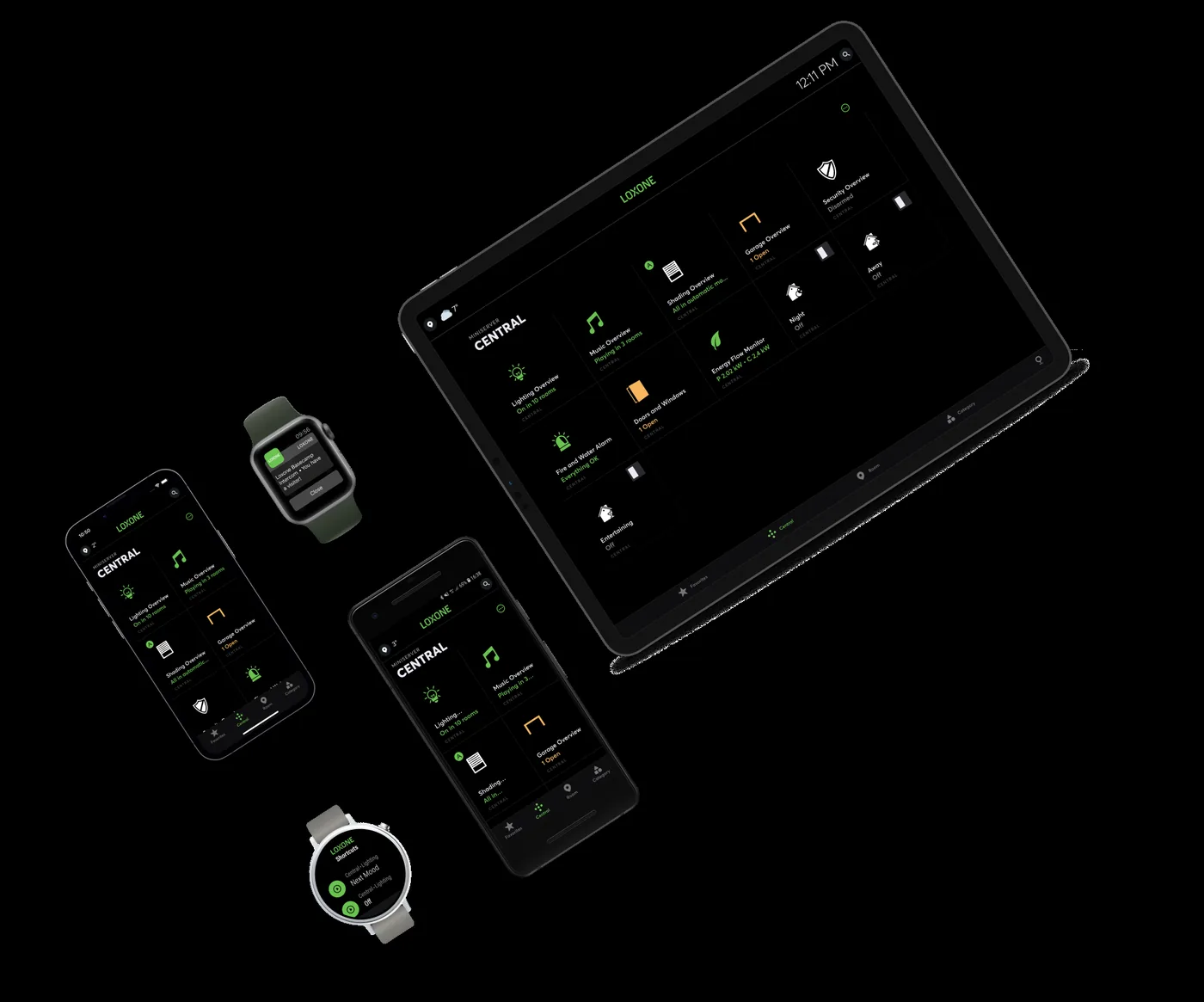
A Loxone price is built from the controller and extensions, field devices, panel and wiring, engineering and configuration, commissioning, documentation and support. The same room count can produce different numbers when the point schedule, interface count or redundancy requirements change. We do not publish a Loxone price list because the hardware mix and engineering scope are project-specific. Send the room schedule, systems in scope and required interfaces, and we will return a line-item quotation after a scope review.
Scope tiers and the line items inside them
18 rows| Scope area | Essential | Integrated | Enterprise |
|---|---|---|---|
| HVAC plant | Core sequencing and alarms | Plant optimisation and trends | Multi-plant coordination and reporting |
| Room control | Setpoints, scenes and schedules | Occupancy and window logic | Guest-room and tenant modes |
| Lighting and shading | Basic scenes and schedules | Presence, daylight and façade logic | Multi-building standards and reporting |
| Metering | Main meters only | Sub-metering and baselines | Portfolio allocation and benchmarking |
| Controllers and panels | Core controller and local panel | Additional panels and segmentation | Standard panels and planned spare capacity |
| Field devices | Core sensors and actuators | Room devices, valves and sensors | Standard device schedule and spares |
| Network and gateways | Core gateway only | Multi-protocol gateway set | Managed network and redundant paths |
| Cybersecurity and remote access | Local access only | Role-based remote access | Multi-factor access, logging and segmentation review |
| Third-party integration | Limited to core plant | Access, CCTV, parking and lifts | Wide subsystem matrix and APIs |
| Supervision | Local operator interface | Central dashboards and trends | Multi-site IBMS and role-based views |
| Alarms | Basic limits and routing | Rationalisation and escalation | Cross-system rules and analytics |
| Reporting | Standard summaries | Energy and comfort reports | Portfolio and ESG reporting |
| Energy analytics | Main meter summaries | Sub-metering, baselines and FDD | Portfolio benchmarking and performance contracts |
| Commissioning | Point and sequence tests | Interlock and failure tests | Full integrated and seasonal testing |
| Documentation | Point schedule and backups | As-built drawings and test records | Operating manual and change control |
| Training and handover | Operator session | Role-based training for operators and engineers | Multi-site training and documentation pack |
| Support | Handover support | Defined optimisation period | Long-term support and reviews |
| Spares and warranty | Standard warranty | Spare set for critical devices | Extended support and replacement plan |
Project images
3 images

Frequently asked
01How much does building automation cost?
There is no single price. The budget depends on the point schedule, the systems integrated, the interfaces, the site conditions and the commissioning scope. We quote after an audit rather than publish a rate that would mislead.
02Why can't you publish a price per point?
A point is not a standard unit. A hardwired input, a bus device and a gateway point require different work. A rate per point would hide engineering, graphics and commissioning, and would make quotes harder to compare.
03What is a point?
A point is a single data item: an input, output, status, setpoint or alarm. The point schedule lists each one with its address, range, unit and alarm limits. Points are the basis for sizing and pricing.
04Does floor area determine the price?
Area is an indirect factor. It affects device count, cable routes, panel count and site time, but rooms, equipment and control depth matter more. A point schedule gives a better basis than a rate per square metre.
05What are the three scope tiers?
Essential covers core plant and room control. Integrated adds multi-subsystem supervision, metering and reporting. Enterprise adds multi-building consolidation, advanced alarm routing, redundancy and long-term support. They are scope bands, not fixed packages.
06Is retrofit more expensive than new-build?
Often, because access, isolation, cable routes and testing are constrained by an occupied building. Existing equipment may also need survey or repair. The difference depends on the condition of the systems and the hours available for work.
07What is usually excluded from a quote?
Cabling, containment, power, network infrastructure, civil works and third-party vendor charges are commonly excluded. The quote should state this explicitly, along with assumptions about point counts and protocols.
08Does country or site location change the price?
It can, through logistics, travel, local labour, import duties and the availability of support. Those factors are stated as assumptions rather than folded into a single rate.
09How do I get a useful quote?
Send the system list, drawings, any existing point schedule and the outcomes the building needs. State whether the project is new-build, retrofit or phased. We will confirm the gaps and return a scope-based, itemised quote.
Next step
Bring us the building.
Tell us the building type, systems in scope and the outcome you need. We will map the shortest path to a working system.
Quick answer
Estimate the point count
A planning estimate based on building type, area, rooms and systems. It is not a design or a quotation.
Planning basis: area, rooms and selected systems. Add 20–30% for spares, graphics and commissioning scope.