Protocols and integration
KNX, BACnet and Modbus: A Protocol Guide
How KNX, BACnet and Modbus differ in data model, topology and integration effort, and how to combine them in one building automation system without losing control of the point list.
Quick answer
KNX is a decentralised field bus for lighting, shading and room control; BACnet is an object-oriented building automation protocol for plant and supervisory systems; Modbus is a simple register-based protocol for meters, drives and equipment. Most buildings use more than one, connected through gateways and a documented point map.
Why the protocol choice matters
Protocols are not an abstract preference. They determine which devices can join the system, which engineering tool is needed, how data is named, how many gateways sit in the middle and who can service the installation later. A protocol with a rich object model makes integration predictable; a register-based protocol gives flexibility but leaves meaning to the integrator. A decentralised bus reduces dependence on a central controller; an IP-based supervisory protocol makes plant integration and remote diagnostics easier. Most buildings end up with more than one protocol, because lighting, plant, metering and room control have different histories and different device ecosystems. The design task is to place each protocol where it fits and to make the boundaries explicit, rather than to declare a winner. A protocol that is easy to install but hard to document will cost more over the life of the building. The boundary is where most integration risk sits: a gateway that nobody owns is a failure waiting for a handover. Protocol choice is therefore a lifecycle decision, not a shopping preference. The question is not which protocol is open, but which parts of the installation remain serviceable when the original integrator is no longer available. A decision made only by the electrical contractor usually ignores the maintenance team.
- Device ecosystem and engineering tools
- Data model and naming
- Gateway count and failure points
- Serviceability and lifecycle support
KNX: decentralised room control
KNX is a field bus for building control, widely used for lighting, shading, HVAC terminals and room functions. Devices are addressed individually and communicate through group addresses, so a switch can control a light without a central programme. Engineering is done in ETS, where the group address structure and device parameters are defined. The decentralised model is resilient: if one device fails, the rest of the bus continues. KNX can be extended over IP with routers and interfaces, which makes it practical across floors and buildings. Its strength is standardised room control with a large device market. Its limitation is that complex plant sequences and cross-system logic usually sit in a supervisory controller or gateway, not in the bus itself. A clean group address plan is the difference between a maintainable KNX installation and a project that nobody wants to touch. Group addresses should be planned by function and location, not by the order in which devices were installed. A line typically supports 64 devices; couplers and segments extend the installation, and each boundary should be documented. Group addresses should also leave room for a new floor or a changed tenancy. A bus that is easy to extend is also easy to over-extend.
- Twisted-pair bus with decentralised logic
- Individual and group addressing
- ETS as the engineering tool
- IP routing for larger installations
BACnet: objects and supervisory integration
BACnet is an object-oriented protocol designed for building automation and control. A device exposes objects such as analog input, analog output, analog value, binary input, binary output, binary value and multi-state objects. Each object has properties: present value, units, status flags, description and alarm limits. Services allow read, write, discovery and change-of-value subscription. BACnet runs over IP and over MS/TP, which lets it reach plant controllers and field devices on the same site. Its object model makes integration more predictable than a raw register map, provided the object names and units are consistent. BACnet testing and device listings help, but they do not replace a point-by-point check during commissioning. Consistent naming across devices is worth more than a long object list. The most common integration defect is not a protocol failure; it is a point mapped to the wrong object or scaled incorrectly. An object browser shows what exists, not what it means. Property-level access matters: a device that exposes a value but forbids writing its setpoint cannot support a reset sequence. The object list should record which properties are writable, not only which are readable.
- Devices, objects, properties and services
- Standard object types for points
- BACnet/IP and MS/TP segments
- Discovery, COV and point testing
Modbus: registers and practical limits
Modbus is a simple request-response protocol built around coils and registers. Modbus RTU runs over serial links; Modbus TCP wraps the same model in Ethernet. A master polls slaves by unit address and function code, reading or writing a defined number of registers. The protocol defines the transport, not the meaning: a register may be a temperature, a status word, an energy counter or a firmware version. That flexibility is why meters, variable frequency drives, inverters and sensors use it, and why every integration needs a vendor register map. Pay attention to scaling, signed values, 32-bit word order, polling intervals and timeout behaviour. A Modbus device that stops responding should produce a clear fault, not a stale value that looks valid. A register that reads zero may mean off, faulted or not configured; the map should say which. Documenting the register map is more valuable than any gateway configuration, because it is what the next engineer will need. A serial segment typically supports 32 units without a repeater, and polling too many devices quickly exposes the limit. The register map should be versioned with the device firmware, because addresses move. Serial diagnostics are limited; a protocol analyser is a commissioning tool, not a permanent fix.
- RTU over serial, TCP over Ethernet
- Master-slave polling and unit addresses
- Coils and registers with vendor-specific meaning
- Scaling, byte order and timeout behaviour
DALI and other field buses
DALI deserves separate treatment because lighting is often the largest device population in a building. A DALI line addresses individual drivers and control devices, typically 64 per line, and carries slow but reliable commands. It is not a building-wide network; gateways connect it to KNX, BACnet or a controller. DALI-2 adds interoperability declarations for sensors and control devices, which matters when products from several vendors share a line. Emergency lighting can be monitored through DALI where the fittings support it, but the test regime and the reporting obligation remain local. The common mistakes are address sprawl, missing maps and a gateway that is treated as a transparent cable. A lighting integration should record the line, the address, the group and the scene membership for every fitting, because that record is what maintenance actually uses. Other buses, such as 0-10V and phase-cut dimming, still exist and should be integrated where they are rather than replaced for uniformity. The design should state which bus owns each luminaire, because two control paths to one driver is a fault waiting to happen. A DALI gateway that loses its map can darken a floor without a single driver failing. Emergency test results should be exported in a form the responsible person can sign.
- Individual driver addressing and groups
- DALI-2 interoperability declarations
- Gateways to KNX, BACnet or controllers
- Line, address and scene records at handover
Combining protocols without a fragile stack
A practical design puts each protocol where its device ecosystem is strongest: KNX for room control, DALI for luminaires, BACnet for plant and supervisory equipment, Modbus for meters and drives. Gateways translate between them, but every gateway is a device with power, firmware, configuration and a failure mode. Keep the gateway count deliberate, document each one and decide what happens when it goes offline. Place control sequences where they can run locally, not only in the gateway. Segment networks so that a fault in one segment does not take down the whole building. Time synchronisation matters for trend analysis and alarm correlation. The integration architecture should be explainable on one page; if it needs a diagram nobody can follow, it is probably too deep. The design should also state which system holds the master clock and how time is distributed. A flat, documented stack is easier to test and cheaper to maintain than a chain of translators. Every additional translation layer adds latency, a configuration file and a person who must understand both sides. A gateway that translates both directions needs a rule for conflicting commands, not only for lost data. Time synchronisation should come from one source, not from every gateway independently.
- One protocol per device ecosystem
- Deliberate, documented gateways
- Local sequences independent of gateways
- Network segmentation and time sync
Decision criteria and gateway selection
Gateway selection is usually decided by three questions: what the device exposes, what the supervisory system can consume, and who will support the link. A native interface is preferable to a gateway when it exists, because it removes a device and a configuration file from the critical path. A gateway is justified when the protocol is not native, when electrical isolation is required, or when the device count exceeds what the controller can poll reliably. Capacity is not only a point count; polling load, response time and the number of simultaneous connections matter. Check whether the gateway supports the object types and services the sequence needs, not only whether it can read a value. Confirm firmware support and the vendor's update policy. Record who configures the gateway, who owns its backup and who is called when it fails. The cheapest gateway is rarely the cheapest integration once support is counted. A gateway that cannot be backed up cannot be replaced in an afternoon. Two gateways in series should be treated as a design smell, even when each one works in isolation. A gateway with no spare capacity becomes the reason the next phase is delayed. As a planning rule, keep polling load and device counts well below the documented maximum, and treat half of the stated capacity as a warning level rather than a target.
- Native interface before gateway where possible
- Check services and object types, not just values
- Polling load and response time matter
- Owner, backup and replacement path recorded
The integration checklist and failure modes
An integration is finished when every point has been proven, not when the gateway appears online. Start with a point list that states source, target, data type, unit, range, scaling, read or write direction, alarm class and fail state. Confirm the object or register map against the vendor documentation. Test normal values, out-of-range values, disconnection, restart and time synchronisation. Check that alarms arrive with the right priority and that they clear correctly. Verify that a gateway failure produces a visible fault rather than a frozen value. Record the results and hand over the maps, credentials and network drawings. The checklist is also a commercial document: it defines what the integrator is responsible for and what remains with the equipment vendor. A signed checklist turns an informal commissioning visit into evidence that the integration works. Without it, every future change starts with an investigation instead of a drawing. The checklist should be reviewed at each phase, not only at the end, because a point that is missing from the list is usually missing from the price. The checklist should be signed by the party that will maintain the system, not only by the installer. The point list is also the clearest defence against scope creep, because it shows what was agreed.
- Point list with units, scaling and direction
- Object or register map verified
- Fault, restart and time-sync tests
- Maps, credentials and drawings handed over
KNX, BACnet and Modbus compared
17 rows| Aspect | KNX | BACnet | Modbus |
|---|---|---|---|
| Origin and scope | Building bus for room and field devices | Building automation and control networks | Industrial register protocol |
| Topology | Bus, tree or star over twisted pair | IP, Ethernet and MS/TP | Serial RTU or TCP |
| Addressing | Individual and group addresses | Device instance and object identifiers | Slave or unit ID plus register address |
| Data model | Group objects and datapoints | Objects, properties and services | Coils and registers without semantics |
| Discovery | Bus programming with ETS | Broadcast discovery and object list | Manual register map |
| Typical devices | Switches, dimmers, actuators and room controllers | AHUs, chillers, VAV boxes and BMS | Meters, drives, inverters and sensors |
| Engineering tool | ETS project | Vendor tool and BMS configuration | Vendor manual and polling setup |
| Read and write model | Group write and read | Services and priority arrays | Function codes and polling |
| Testing | Bus scan and group test | Object browser and COV test | Register read, write and scaling test |
| Licensing | ETS licence per project | Vendor tools and device testing | Usually no protocol licence |
| Typical fit | Lighting, shading and room control | Plant and supervisory integration | Metering and equipment data |
| Common pitfall | Group address sprawl | Object mapping without units | Wrong byte order and scaling |
| Typical segment limit | 64 devices per line before couplers | MS/TP segment commonly kept well below 127 nodes | 32 units per serial segment without a repeater |
| Response behaviour | Fast for room commands, slow for large group reads | COV subscriptions reduce polling load | Polling cycle grows with device count |
| Cybersecurity | Local bus, IP routers need hardening | IP networks need segmentation and access control | Serial links isolated, TCP needs network rules |
| Documentation | Group address plan and device list | Object list with units and COV settings | Register map with scaling and word order |
| When not to use | Large plant sequences and cross-site logic | Simple meter reads on a small serial link | Complex objects, alarms and scheduling |
Project images
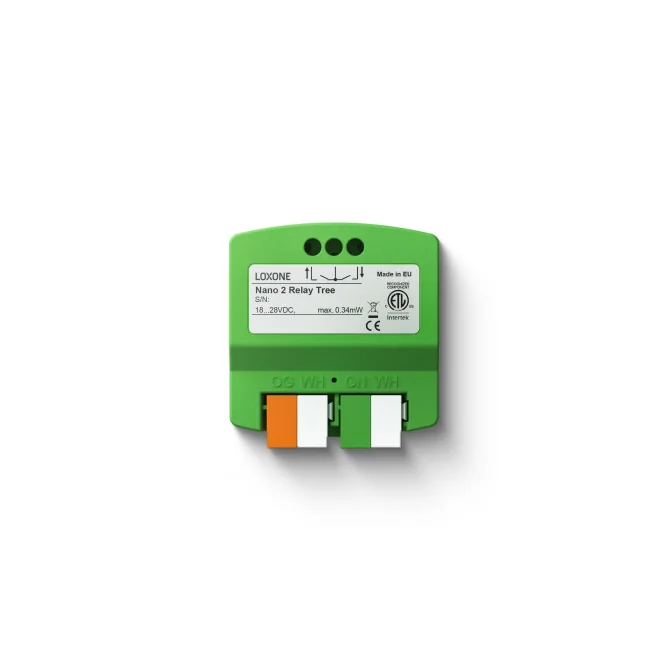
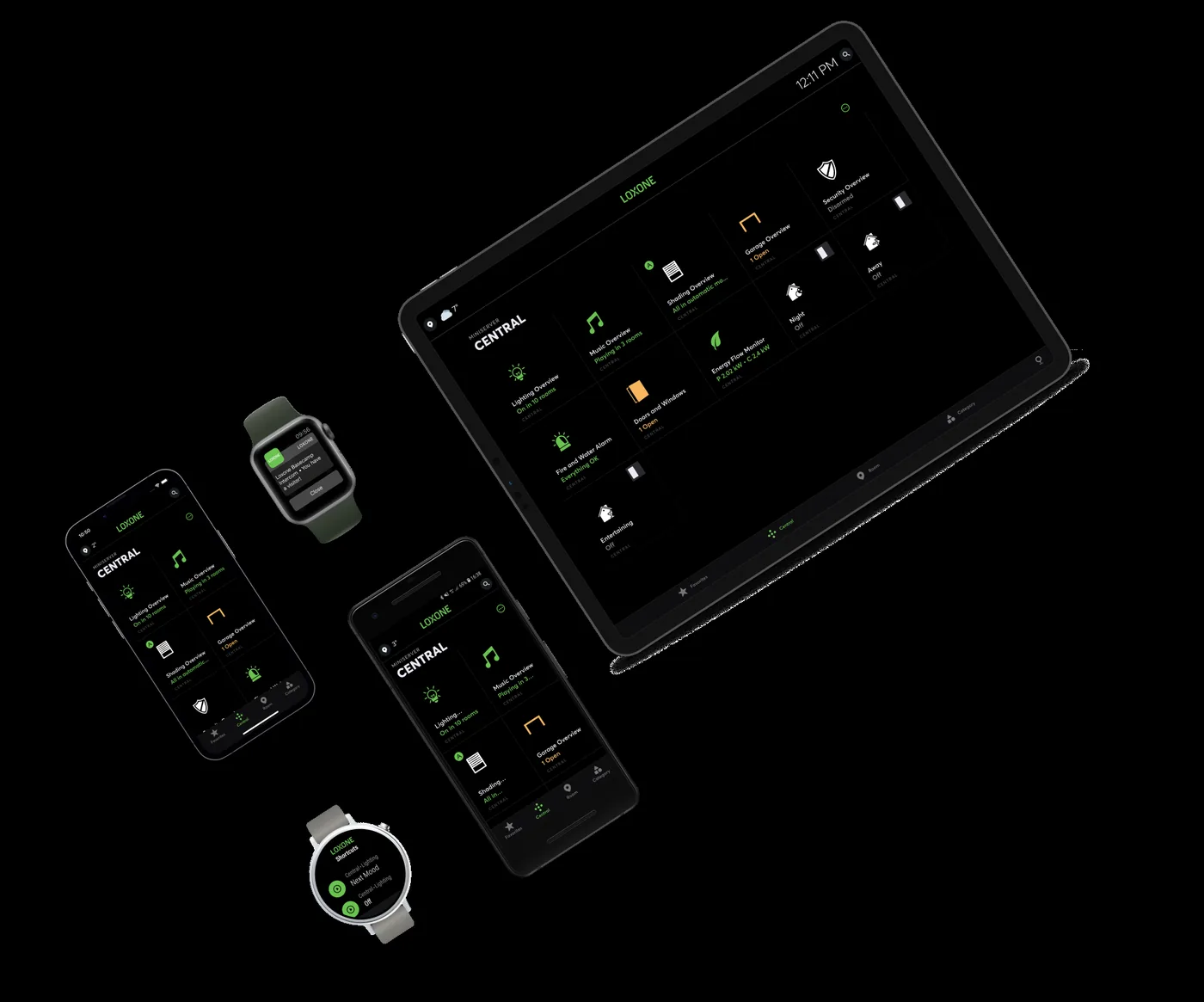
3 images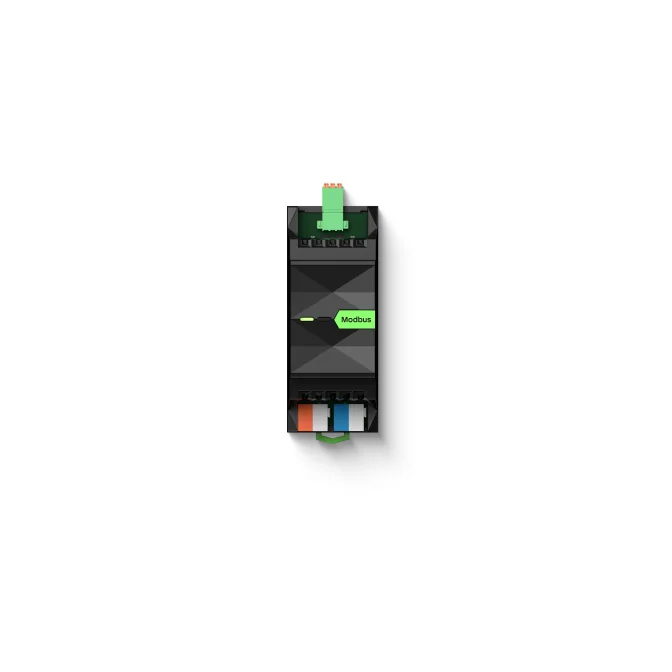
Frequently asked
01Which is better, KNX or BACnet?
They solve different jobs. KNX is strong in room and field control; BACnet is strong in plant and supervisory integration. Many projects use both, with a gateway or a controller that speaks both. The choice should follow the device ecosystem, not a preference. A project that forces every device onto one protocol usually pays for it in gateways or in lost functionality.
02Can one controller speak all three protocols?
Sometimes, through native interfaces or gateways. Check which protocols are native, how many points each interface supports, and whether the controller can run the sequences you need while polling external devices. Native support on a datasheet does not guarantee the point capacity or the services the sequence requires.
03Is Modbus TCP the same as Modbus RTU?
They share the same register model but use different transport. RTU runs over serial links with timing constraints; TCP runs over Ethernet. Gateways between them are common, and polling behaviour should be checked. A TCP gateway in front of a slow serial device does not make that device faster, and the timeout should reflect the real response.
04What is a BACnet object?
An object is the representation of a point or function inside a device, with properties such as present value, units, status and alarm limits. Integration maps those objects to the supervising system's point names. The mapping should preserve units, scaling and meaning, because a correctly connected object with the wrong units is still a wrong reading.
05Do I always need gateways?
No. Many devices expose BACnet, Modbus or KNX directly. A gateway is needed when the interface, topology or vendor licensing requires translation. Every gateway should have an owner and a documented fail behaviour. Each gateway also adds a firmware dependency, so its update history belongs in the maintenance plan.
06How many devices fit on a bus?
It depends on the protocol, the segment, the power budget and the topology. The design should follow the standard and the manufacturer's rules, then verify loading and response times. There is no responsible universal number. A bus that works on the bench with ten devices may behave differently with forty, especially when polling and power are near the limit.
07How should integration be tested?
Point by point: normal values, out-of-range values, disconnection, restart, alarm priority and time synchronisation. Record the results and hand over the object or register maps. A gateway that is online is not the same as an integration that works. The test should also include the loss of the gateway itself, because that is the failure the building will eventually experience.
Next step
Bring us the building.
Tell us the building type, systems in scope and the outcome you need. We will map the shortest path to a working system.