BAS · Architecture
BAS Architecture — From Sensor to Operator Screen
How a building automation system is structured: field devices, DDC controllers, the supervisory network and the operator interface.
Quick answer
A BAS architecture connects field devices to DDC controllers, then controllers to a supervisory network and operator interface. Control loops run in the controllers, so the plant keeps working if supervision is lost; the supervisory layer adds scheduling, alarms, trends and integration with other systems.
Field layer: sensors and actuators
The field layer is where the building meets the controller. Sensors report temperature, pressure, humidity, flow, status and occupancy; actuators move valves, dampers and fans. Inputs may be analogue, digital, resistive or bus-based, and each type has its own wiring and accuracy limits. The design decision that matters is placement: a supply-air sensor in the wrong duct position, or a differential-pressure tap near an elbow, will produce a plausible but wrong signal. Actuator fail positions must be chosen deliberately, because a closed valve and an open valve fail in different ways. A sensor that is accurate but badly placed is worse than a sensor that is obviously failing. Commissioning should verify placement, not only wiring.
Controller layer: DDC and terminal controllers
DDC controllers run the sequences. They read inputs, execute logic and drive outputs without waiting for a server. Their I/O mix should follow the point schedule, not a catalogue default, and spare capacity should be documented rather than assumed. Large plant controllers, AHU controllers and terminal controllers have different jobs and different enclosure requirements. Put controllers where they can be serviced, protect them from heat and moisture, and label every cable. A controller that is hard to reach will be bypassed during a fault, and a bypassed controller becomes a permanent manual mode. The controller schedule should show which controller owns which sequence and which points are shared. Shared points need an owner; otherwise two sequences fight over one output.
Supervisory layer: one view, many controllers
The supervisory layer collects data, presents graphics, routes alarms, stores trends and publishes reports. It also holds schedules and setpoints where the client needs central control. It should not run fast control loops; those belong in the controller, where they continue during a network outage. Integration gateways for BACnet, Modbus, KNX or DALI sit at this boundary, and each one should have an owner and a point map. The supervisory layer is also where naming conventions are enforced, because it is the layer most people actually see. Where a vendor portal is the only interface, treat it as a risk and document the workaround. Central schedules should be editable without a code change.
What a BAS architecture drawing must show
A useful architecture drawing shows more than boxes. It shows the network riser, controller addresses, field bus segments, gateway locations, power and UPS arrangements, and the boundary between packages. Pair it with a point schedule that names every point consistently. Add a responsibility matrix for interfaces: who supplies the gateway, who configures it, who tests it and who fixes it after handover. Without those documents, the drawing is decoration; with them, it becomes the reference that commissioning, maintenance and future fit-out all use. The drawing should be issued as a controlled document with a revision number. At handover, walk through it with the client's technician.
BAS layers at a glance
5 rows| Layer | Function | Typical hardware | Failure behaviour |
|---|---|---|---|
| Field | Measure conditions, move valves and dampers | Sensors, actuators, meters | Fail position must be defined |
| Controller | Run sequences and local safety | DDC, AHU and terminal controllers | Sequences continue standalone |
| Network | Carry data between controllers and supervision | IP switches, field bus segments, repeaters | Documented failure mode and recovery |
| Supervision | Graphics, alarms, trends, schedules, reports | Server, software, gateways | Plant keeps running; visibility is reduced |
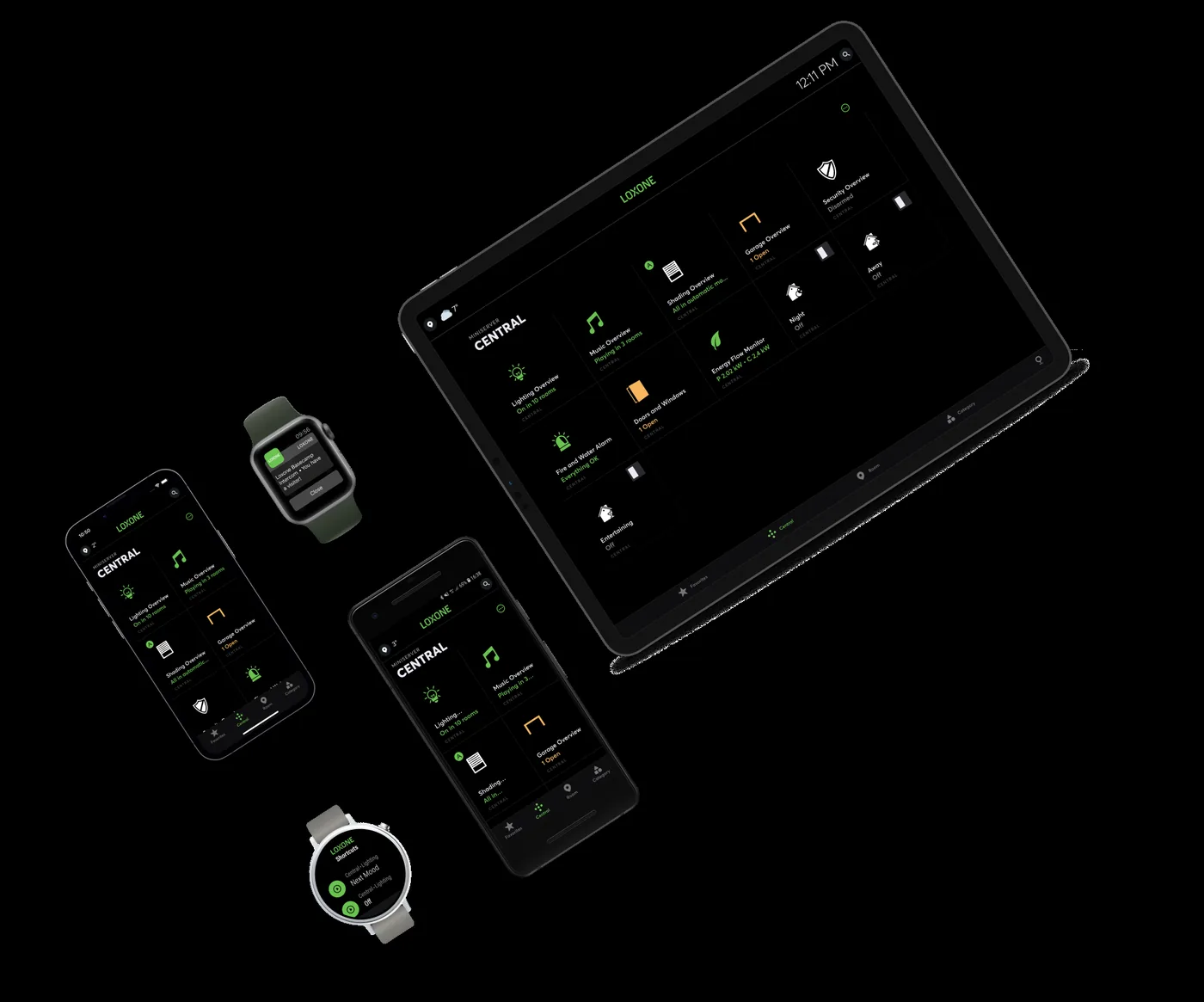
| Application | Role-based operation and reporting | Workstation, mobile app, reports | Cached views may be unavailable |
Project images
3 images
Frequently asked
01What is a DDC controller?
A direct digital controller is a programmable device that reads sensors and drives actuators using digital logic. It runs the control sequences locally, independent of the supervisory server.
02Can a BAS run without a supervisory server?
Yes. The controllers hold their sequences and schedules. The server adds central graphics, alarm routing, trends and reporting, but it should not be required for plant operation.
03How much spare I/O should be provided?
Enough for the documented future fit-out, with the allowance stated in the point schedule. A vague spare-capacity clause is difficult to verify at handover.
04Is BACnet required for a BAS?
No. BACnet is common for plant and third-party integration, but Modbus, KNX and DALI may fit field devices better. Specify an open interface, not one protocol name.
05What is the difference between BAS and DDC?
DDC is a controller technology. BAS is the complete system: field devices, controllers, network, supervision and operator interface. A BAS contains DDC controllers but is not defined by them.
Next step
Bring us the building.
Tell us the building type, systems in scope and the outcome you need. We will map the shortest path to a working system.