Продуктовые линейки
Building Automation Product Lines
The five product lines we integrate, what each is good at, and how we choose between them for a building automation project.
Why the line is chosen per project
Most buildings are mixed estates before we arrive: a chiller plant from one supplier, VAV boxes from another, lighting gear from a third, and a specification written around whatever the consultant last used. Forcing one product line across that estate produces a gateway on every floor and a point model nobody owns. We start from the plant schedule and the operator model instead, then choose the line that carries the most points natively. The rest is deliberate integration, documented in one point map rather than spread across four vendor tools.
- Start from the plant schedule, not the product catalogue
- Count points per subsystem before choosing a controller
- One point map and one naming convention across lines
- Keep gateways at the edge of the system, not in every room
KNX — decentralised room and lighting control
KNX runs on a dedicated twisted-pair bus with power and data on the same cable, and it has no single head-end that can take the building down. Devices are addressed individually, group addresses define behaviour, and logic can sit in the devices themselves. It suits lighting, shading, room control and small plant, where the risk is local and the wiring is long. Engineering is done in ETS, so the project file matters as much as the hardware. A line supports 64 bus devices before a coupler is needed, and the practical limit is usually the number of group addresses a maintenance team can still read.
BACnet — the native language of HVAC plant
BACnet is what chillers, AHUs, VAV controllers and meters speak when the specification is written properly. Objects and services carry the semantics a BAS needs: present value, status flags, alarm limits, schedules and trends. On IP it runs over the building network; on MS/TP it runs on a two-wire field bus at 9.6 to 76.8 kbps. Conformance statements matter more than datasheet claims — a device that supports only a handful of objects will still need gateway work. We read the PICS before we promise a native integration.
Modbus and DALI — field devices and lighting gear
Modbus is the pragmatic choice for meters, variable-speed drives, chillers and anything with a register map. RTU over RS-485 is still everywhere on site; TCP over Ethernet is easier to segment and monitor. The protocol has no standard object model, so the register map is the integration: we ask for it before commissioning, not after. DALI covers lighting gear under IEC 62386, with 64 addresses per line and broadcast or group commands for scenes. Both are cheap to wire and easy to fault-find, which is why they survive on site long after the original panel supplier has gone.
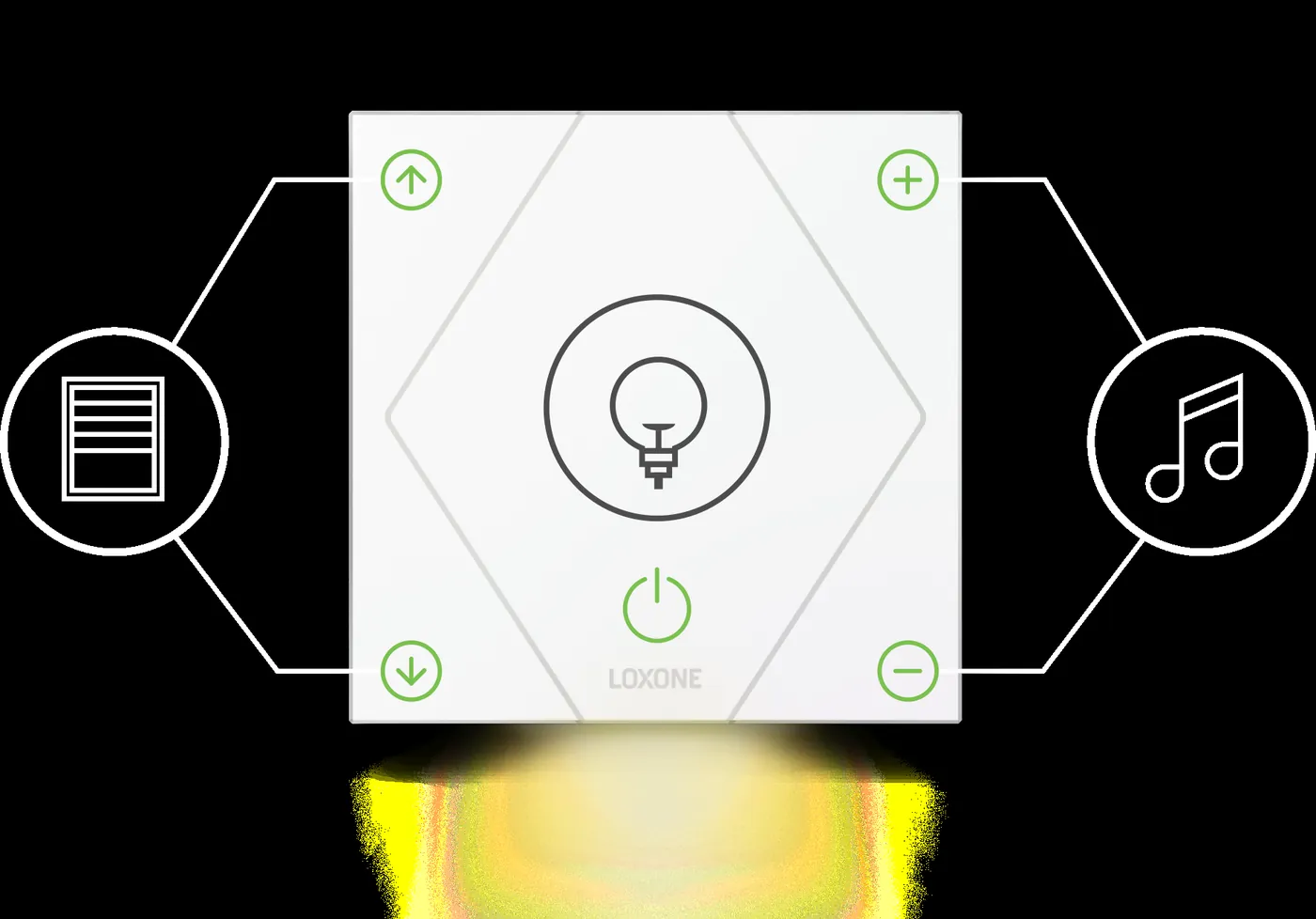
Loxone — local-first control for villas and small hotels
Loxone puts the controller, the room logic and the app in one product family, with Tree, Air and 1-Wire for devices and gateways for KNX, BACnet and Modbus. That makes it efficient where a single team owns the whole building: villas, small hotels, restaurants and showrooms. It is one product line among several here, not the company. Where a project needs a multi-vendor plant, a formal alarm class structure or a consultant-specified BACnet backbone, we design on BACnet or KNX and use Loxone only for the rooms where it earns its place.
What stays the same across every line
The controller is the least interesting decision on a project. What determines whether the building runs well two years later is the layer above it: point naming that a new engineer can follow, alarm classes that match who responds, schedules the operator can change without a programmer, graphics that show the plant as it is actually piped, and as-built documentation that matches the installed system. We hold those constant across KNX, BACnet, Modbus, DALI and Loxone, so a change of platform does not mean a change of operating model.
Where each line fits
5 rows| Line | Best fit | Practical limit | Integration route |
|---|---|---|---|
| KNX | Lighting, shading, room and small plant control | 64 bus devices per line before a coupler | KNX/IP gateway to the supervisory layer |
| BACnet | Chillers, AHU, VAV, meters, multi-vendor plant | MS/TP segment length and device count | Native IP or MS/TP router |
| Modbus RTU/TCP | Meters, drives, chillers, third-party equipment | 247 addresses per serial segment | Register map, polled by controller or gateway |
| DALI | Lighting drivers, sensors, emergency gear | 64 addresses per line | DALI gateway to KNX, BACnet or Loxone |
| Loxone | Villas, small hotels, restaurants, showrooms | Controller I/O and bus device count | Tree, Air, 1-Wire, plus KNX, BACnet, Modbus gateways |
Limits to design against
6 rows| Пункт | Practical value | What it changes |
|---|---|---|
| KNX bus devices per line | 64 before a coupler | More lines, not longer lines |
| Modbus RTU addresses per segment | 247 | Poll cycle lengthens with point count |
| DALI addresses per line | 64 | Each line needs its own supply and gateway |
| BACnet MS/TP segment | Device count and length depend on baud rate | At 9.6 kbps polling must be grouped |
| BACnet/IP network | Segmentation and broadcast domain | One VLAN per floor or per system |
| Gateway point capacity | Size against the final point list | A gateway at 90% is a future change order |
Изображения проекта
3 images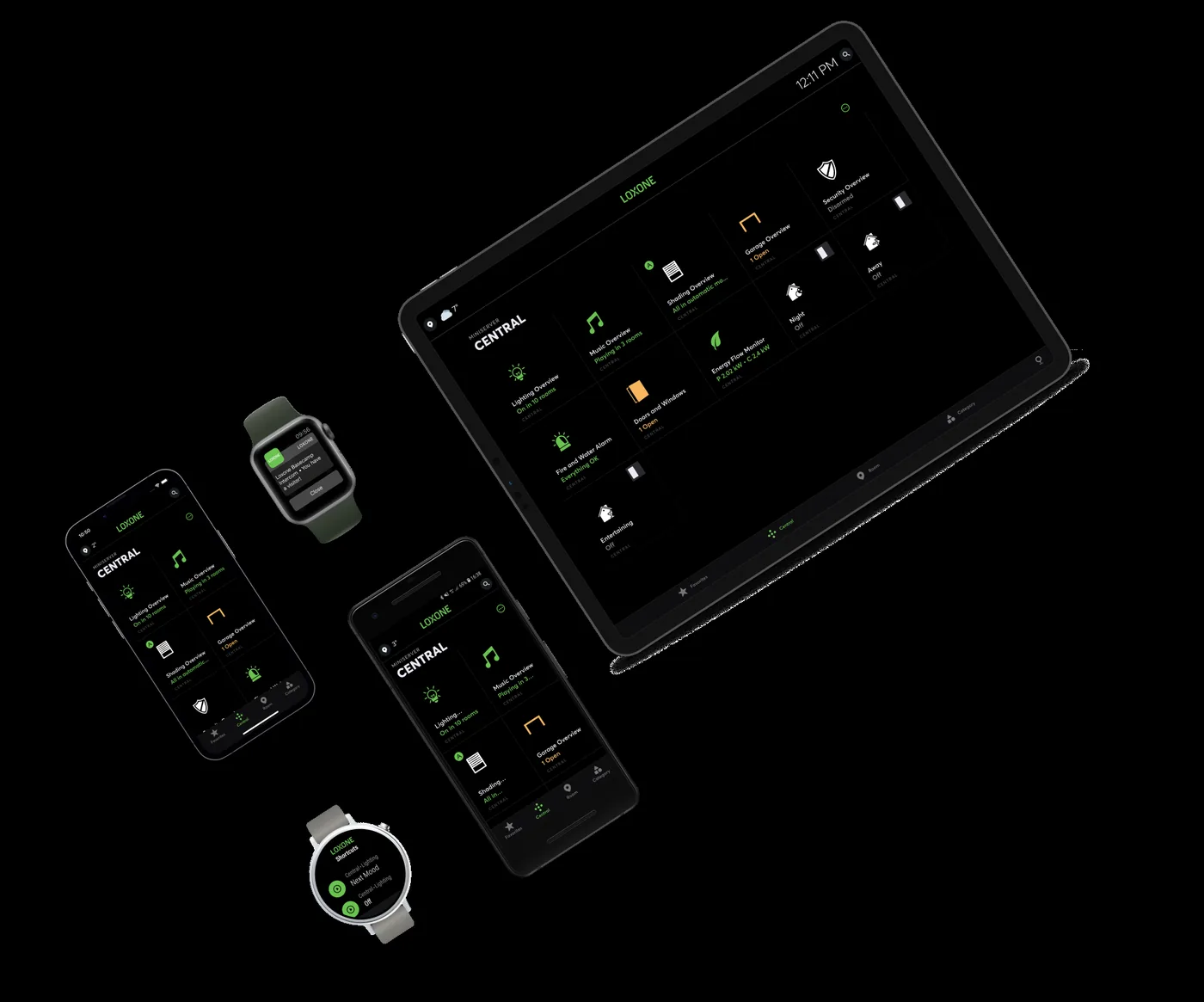
Частые вопросы
01Which product line should my project use?
It depends on the plant and the operator, not on preference. If most of the points sit in HVAC equipment from several suppliers, BACnet is usually the shortest route. If lighting, shading and rooms dominate, KNX is efficient. If the building is a single villa or a small hotel run by one team, Loxone keeps the stack simple. Send the plant schedule and the point list and we will say which line carries most points natively.
02Can you mix several lines on one project?
Yes, and most projects do. The rule we apply is that each subsystem uses the line it speaks natively, and the crossing points are explicit: a documented gateway, a point map and a naming convention that survives handover. Mixed systems fail when the gateways are undocumented, not because they are mixed.
03Is Loxone a replacement for BACnet?
No. Loxone is a control product line that can read and write BACnet through a gateway; it is not a BACnet building management platform in the sense a consultant specifies. For a villa or a small hotel it can carry the whole building. For a campus with a specified BACnet backbone, it is a room-level or subsystem-level choice at most.
04Do you supply the hardware as well as the integration?
Yes. We are an integrator and panel builder, so we specify, supply, assemble and commission the panels, and we integrate third-party equipment the client or consultant has already selected. We are not a manufacturer and not a brand distributor, and we do not present a product line as our own.
05How do you avoid gateway sprawl?
By deciding the integration topology before the point list is frozen. Each gateway has one job, one owner and one document; where a device can join a native segment instead, we use the native segment. We also count gateway points against the total, because a gateway that is 90 percent full at handover is already a future problem.
06Can you work with the platform our consultant specified?
Usually yes. If the specified platform is one we integrate, we work to the specification. If it is outside our lines, we will say so before the tender rather than after, and propose either a conforming alternative or a scope split with the party who does hold that platform.
Следующий шаг
Приведите нам здание.
Расскажите о типе здания, системах в объёме работ и нужном результате. Мы покажем кратчайший путь к работающей системе.